Maxime Daigneault | Véronique Girard
- Voice
- Acoustic instruments
- Digital devices
- 5 to 12 years of age
3 months
- Education
Inner Voices {Voix intérieures}
Description
Inner Voices {Voix intérieures} is a collaborative opera project by and for children that invites groups of kids to help create operatic works inspired by their imaginations. These operas take place in abstract worlds where personal growth and collective strength guide dreamlike quests that unfold across non-linear timelines.
Rather than asking children to perform a pre-written work, the project invites them to participate in the creative process itself. Over several weeks, students immerse themselves in the world of contemporary opera through workshops where they explore music and stage creation as a space for play, ritual, and experimentation. Under our care, each group learns to master stage practices by working on presence, movement, voice, and the conceptualization of ideas. The project aims to develop self-confidence, active listening, and personal expression through a shared artistic experience.
“If you could create anything, in a world where the only limit would be your imagination, what would it be?”
This question lays the foundation for a space of absolute trust that we seek to establish in our projects in order to nurture children’s creative essence as well as their relationship to new music and the opera of tomorrow.
The underlying themes we discover when listening to the voices of tomorrow in participatory music are not about taking risks or fear of the unknown. Rather, they revolve around genuine human connections and a thriving openness to new experiences.
Operas’ synopsis
Paréidolie (2023) (Pareidolia): a look at the collective nature of our species across space and time, where messages revealed through the clouds prompt us to reflect on our personal development.
Fioles de rêve (2024) (Vials of Dream): an exploration of lucidity in dreams, the various human qualities that can flourish there, as well as a study of flow objects to highlight the colorful landscape of the dream world.
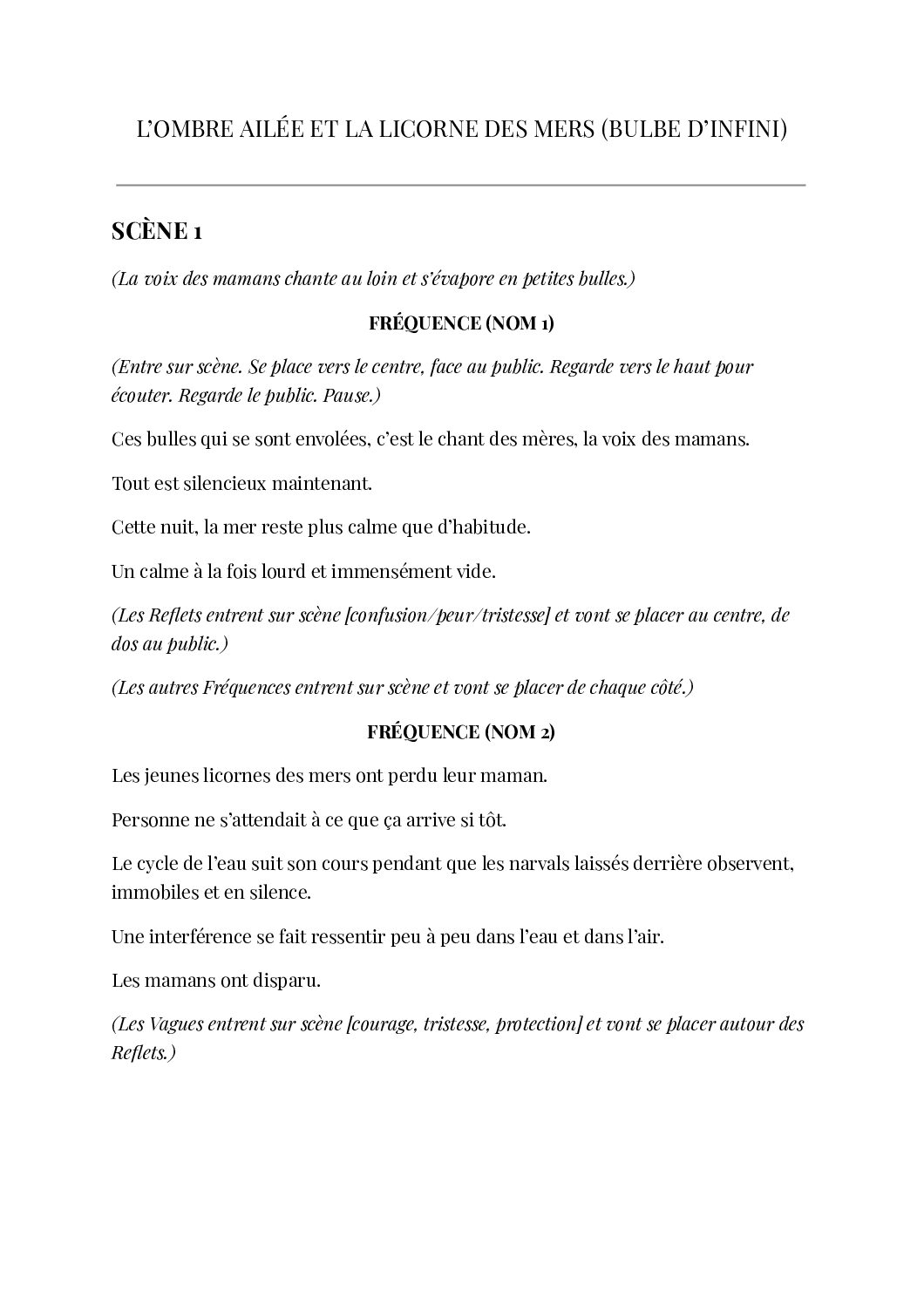
L’ombre ailée et la licorne des mers (bulbe d’infini) (2025) (The Sea Unicorn and the Lesser False Vampire (Seed of Infinity)): a healing journey through the use of the elements of water and air, as well as our star animals: the bat and the narwhal. A dive into symbolism and memory to find inner strength and peace.
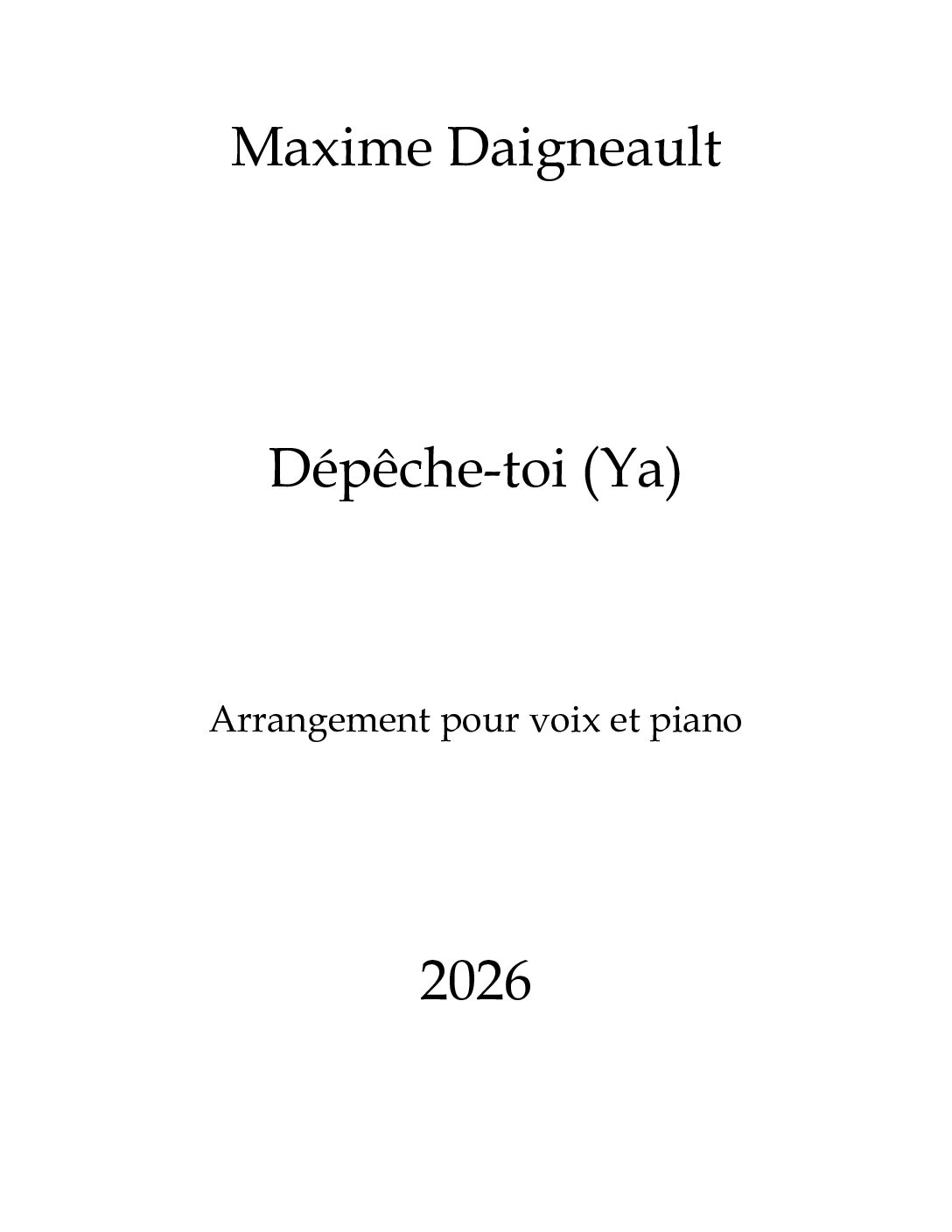
Dépêche-toi (2026) (Hurry Up): a manifesto on time in the school ecosystem, where children and adults try to press a magic acceleration button to complete their activities. In the end, is it really effective?
Project implementation timeline (13 weeks)
The work is created during a 12-week residency in a school setting. Students participate in the creation of the opera and take part in its public performance, accompanied on stage by Maxime and an ensemble of professional musicians, as well as by Véronique and a dedicated technical team both backstage and in the control room.
Meeting with the groups and introduction to the theme | Week 1
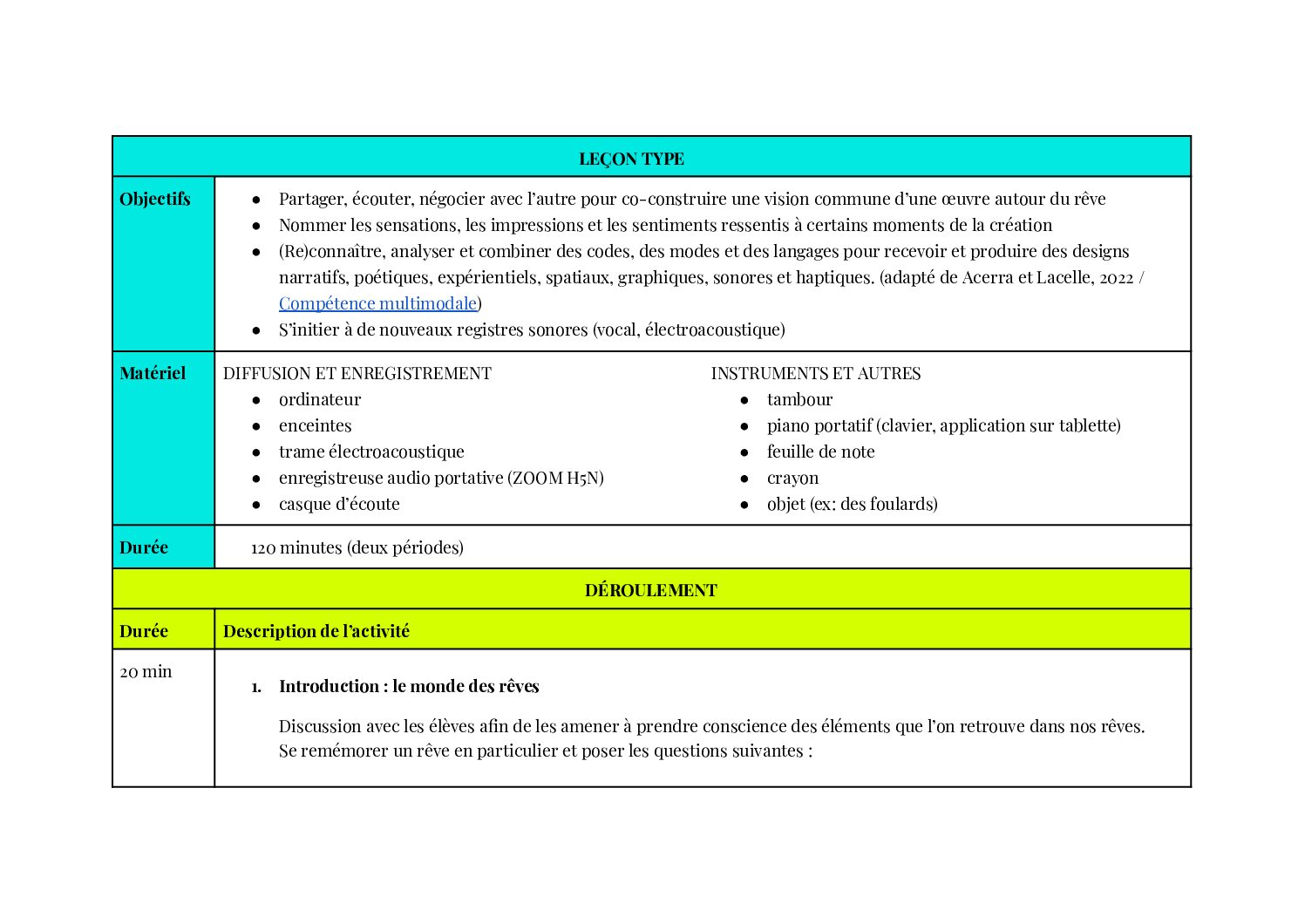
Exploratory activities (theme, music, opera, voice)
Story development | Weeks 1–6
Experimentation with musical, textual (libretto), and choreographic material
Creation of compositions based on the experiments | Weeks 5–7
Finalizing the libretto and sharing the first pieces with the students
Performance work and collaborative creation | Weeks 7–10
Assigning roles, character development, staging (drawing inspiration from discussions with students and group interactions to finalize the pieces)
Connecting the work to our reflections on the theme | Weeks 9–12
Refining the musical material, developing a sense of connection to one’s character, and staging work
Visual design | Weeks 3–12
Creating symbols that contribute to the visual aspect of the work (on-stage projections) and costume elements
Rehearsals for the performance | Weeks 11 and 12
Public Presentation | Week 13
This public presentation is made possible through a partnership with Le Vivier, an organization specializing in contemporary music. The project has also received support from the “La culture à l’école” program of the Quebec Ministry of Education (MEQ), as well as from the Quebec Ministry of Culture and Communications (MCCQ) and the Conseil des arts et des lettres du Québec.
Excerpt from our logbook
Logbook
Planning and Revealing, Week ___
GETTING TO KNOW EACH OTHER
- Three well-being-focused questions to answer, followed by each student taking turns to share:
- An object that helps you refocus
- A comforting place
- A soothing activity you do to calm yourself down
CREATION
- Draw a picture representing the project that will be used in the video presentation
- Draw from a deck of vocal game cards and explore with the groups
- Chant selected slogans as a group with very intense piano accompaniment (the voice must be louder than the piano)
REFLECTION
- The more organized we are with a clear and shared plan, the more we can experiment and discover things (openness)
- Giving children decision-making power connects them to the project
- Vary the approaches across the three groups to avoid repetition and better listen to the group’s needs and ideas
CHALLENGE
- To engage a non-participating student: stay close with kindness and participate with the group until they feel connected. (for example: during the choir)
Contact
Maxime Daigneault [daigneault.maxime(at)gmail.com]
Véronique Girard [veronique.d.girard(at)gmail.com]
Read More +Score
Video
Audio
Image Gallery


